Monitoring, Evaluation and Learning for NGOs in Africa: A Practical Guide to MEAL
For NGOs and development organisations across Africa, delivering project activities is only part of the responsibility. Funders, communities and programme leaders also need credible evidence of what has changed, who has benefited and what should improve. Monitoring, Evaluation, Accountability and Learning (MEAL) helps turn project information into better decisions.
What is MEAL in NGO project management?
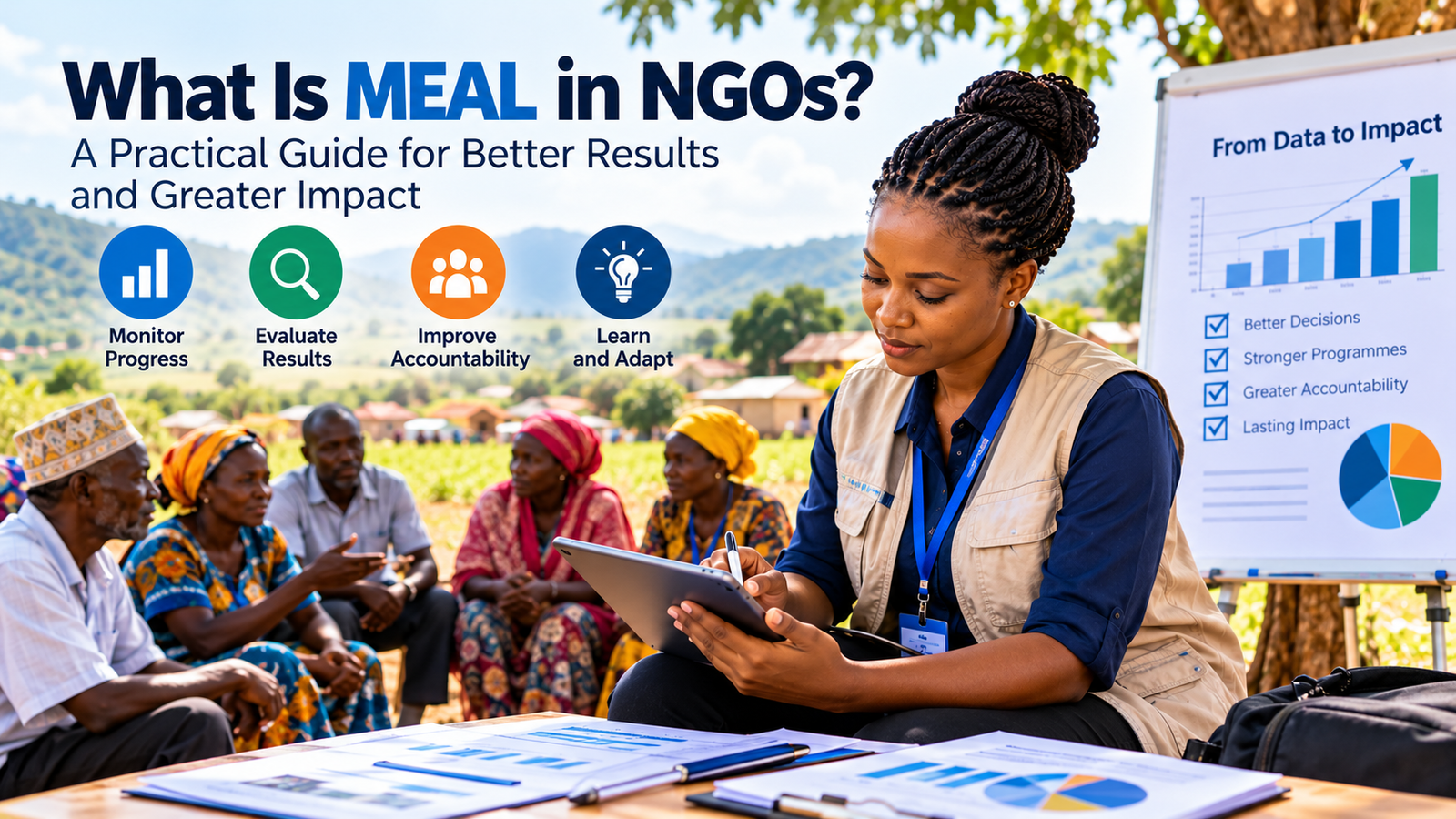
Monitoring tracks progress against activities, outputs and indicators. Evaluation examines the merit and results of an intervention. Accountability means sharing information, listening to affected communities and responding to concerns. Learning means using evidence to adapt programmes rather than simply filing reports.
Why MEAL matters for African NGOs and development projects
Projects in education, public health, agriculture, livelihoods and humanitarian response often operate across multiple locations and partners. Without reliable monitoring systems, teams may struggle to explain results, identify delivery gaps or justify adjustments. A practical MEAL approach supports transparent donor reporting, community participation, better resource allocation and organisational learning.
Seven steps to build an effective MEAL system
1. Define the change the project aims to achieve
Start with a clear problem statement, theory of change and results framework. Distinguish activities and outputs from outcomes and longer-term impact.
2. Select meaningful indicators
Choose a manageable mix of quantitative and qualitative indicators. Define each indicator, its baseline, target, source, collection frequency and responsible person in an indicator reference sheet.
3. Develop a realistic data collection plan
Match methods to the decisions they need to inform: surveys, administrative records, interviews, focus groups and observation. Pilot instruments, train enumerators and budget for quality assurance.
4. Protect data quality and confidentiality
Check completeness, accuracy, timeliness and consistency. Apply informed consent, proportionate data access, secure storage and relevant data protection requirements, especially where vulnerable people are involved.
5. Make accountability accessible
Explain project commitments in locally appropriate languages and formats. Provide safe, accessible channels for feedback and complaints, with clear responsibilities for response and escalation. The 2024 Core Humanitarian Standard places communities’ rights, participation and accountability at the centre of humanitarian action.
6. Analyse findings and communicate results
Compare actual performance with targets, disaggregate data where appropriate and explain limitations. Use concise dashboards and narrative reports that connect findings to management decisions.
7. Build regular learning and adaptation into delivery
Hold structured review meetings, document lessons and assign actions. If participation is lower than expected, investigate barriers and adjust outreach, timing or delivery methods rather than waiting for the final evaluation.
How should NGOs evaluate project performance?
The OECD Development Assistance Committee identifies six widely used evaluation criteria: relevance, coherence, effectiveness, efficiency, impact and sustainability. These are guiding questions for evaluative judgement, not a single prescribed evaluation method. Teams should select and apply them thoughtfully according to the programme and its context.
Common MEAL mistakes to avoid
- Collecting large volumes of data without a clear decision-making purpose.
- Tracking activities while overlooking changes in participants’ lives.
- Setting targets without credible baselines or definitions.
- Reporting only positive findings and ignoring unintended effects.
- Treating community feedback as a formality rather than an input to decisions.
- Failing to budget for data quality, evaluation and staff capability.
Which MEAL skills should NGO professionals develop?
Useful competencies include results-based management, theories of change, logical frameworks, indicator design, quantitative and qualitative data collection, data quality assurance, digital reporting, evaluation planning, feedback mechanisms and adaptive management. Programme managers need enough MEAL literacy to act on evidence, even when a specialist manages the technical system.
Strengthen your organisation’s MEAL capacity
Alverton Global Consultancy supports practical professional development for NGOs, government bodies and development organisations. Our Monitoring, Evaluation, Accountability & Learning (MEAL) course introduces the frameworks and tools professionals can apply to programme design, implementation, reporting and improvement. Institutions can also explore tailored team training aligned with their operational context.
Frequently asked questions
What is the difference between M&E and MEAL?
M&E focuses on monitoring progress and evaluating results. MEAL explicitly adds accountability to affected people and systematic learning for better decisions.
Do small NGOs need a MEAL framework?
Yes. A proportionate framework with a few meaningful indicators, clear feedback channels and regular reviews can be more useful than a complicated system that staff cannot maintain.
What tools are used in MEAL?
Common tools include logical frameworks, indicator tracking tables, surveys, interview guides, feedback registers, spreadsheets, mobile data collection platforms and reporting dashboards.
How does MEAL support donor reporting?
It provides documented evidence of activities, results, challenges and corrective actions. Specific reporting obligations always depend on the relevant grant agreement.
Further reading

You may also like
How to Build a Logical Framework for NGO and Donor-Funded Projects
Public Financial Management Reform: Priorities for Local Governments