
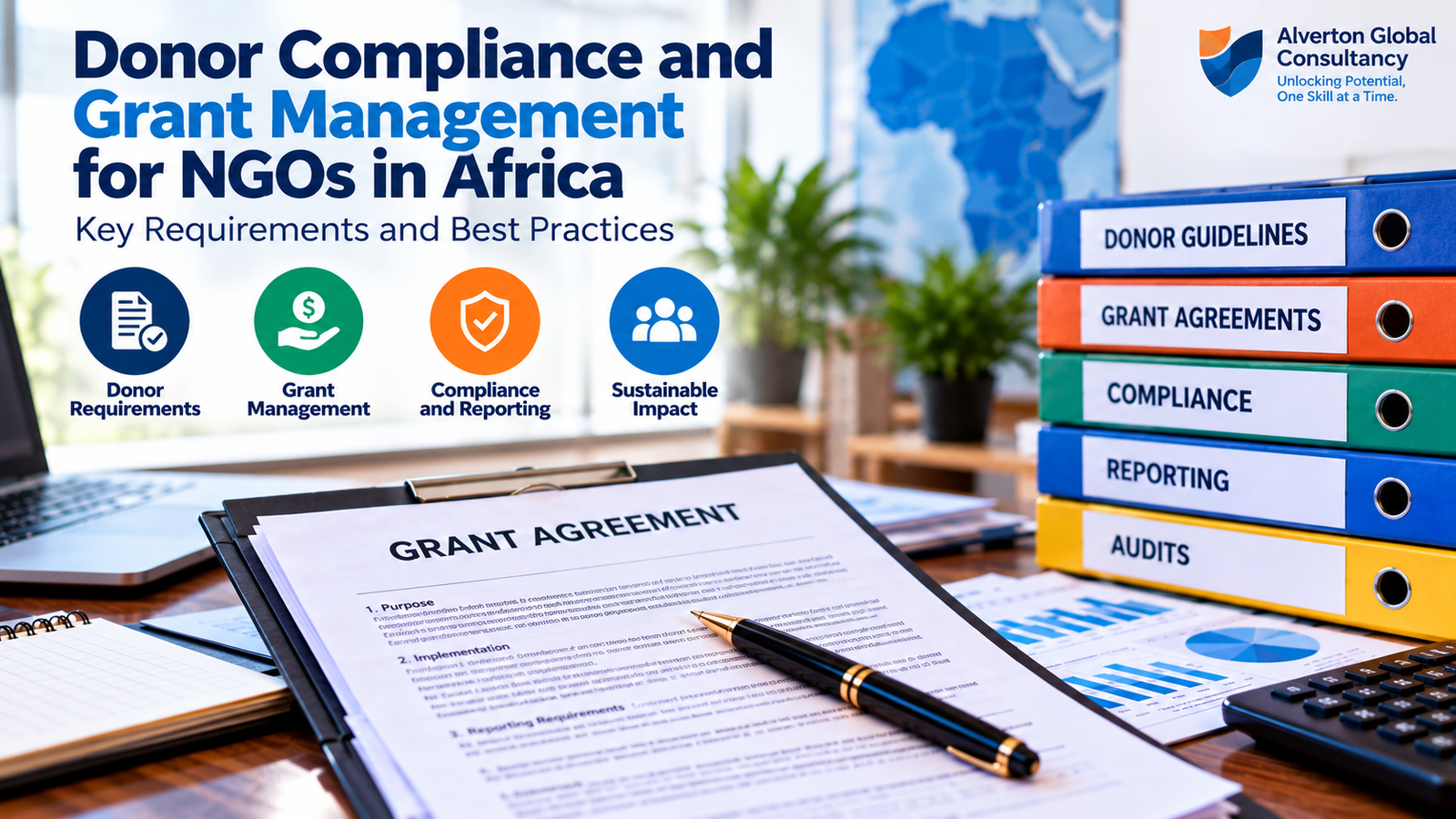
Donor Compliance and Grant Management for NGOs in Africa: 10 Essential Practices
Winning a grant is an important milestone for a nonprofit organisation. Managing that grant responsibly is what protects the funding, strengthens relationships with donors and helps communities receive the intended benefits. For NGOs operating across Africa, donor compliance and grant management require more than accurate bookkeeping: they depend on clear responsibilities, documented decisions, effective procurement and credible reporting.
What is donor compliance in NGO grant management?
Donor compliance means meeting the conditions set out in a grant agreement and any applicable laws, policies and reporting requirements. These may govern eligible expenditure, procurement, safeguarding, record retention, sub-grants, financial reporting and changes to approved activities. Requirements vary by funder and agreement; there is no single rulebook that applies to every NGO grant.
Why grant compliance matters
Weak controls can lead to questioned costs, delayed disbursements, missed deliverables, reputational harm or repayment demands. Strong systems help teams detect problems early, demonstrate responsible stewardship and make decisions based on reliable information.
10 practical donor compliance practices for NGOs
1. Translate the grant agreement into an obligations register
Record key conditions, reporting deadlines, approval thresholds, eligible cost rules and responsible staff. Review the register at project start-up and whenever the donor approves a change.
2. Align project budgets with approved activities
Link budget lines to the workplan and reporting framework. Monitor commitments as well as payments, and document budget revisions before applying changes that require donor consent.
3. Separate financial duties
Where staffing permits, divide purchasing, approval, payment processing and reconciliation responsibilities. Small organisations can use compensating controls, such as independent management review, when full separation is impractical.
4. Keep a complete audit trail
Maintain accessible records of approvals, contracts, invoices, delivery evidence, payments and supporting explanations. Apply the retention period required by the agreement and applicable law, and protect personal or confidential information.
5. Use fair and documented procurement procedures
Plan purchases early, define specifications, document quotations or competitive processes where required, manage conflicts of interest and verify receipt of goods and services. Apply the procurement rules applicable to each grant rather than assuming one threshold fits all donors.
6. Monitor partner and sub-grantee performance
Assess partners before awarding funds, set clear agreements, provide proportionate support and review both financial records and programme results. Escalate concerns through agreed channels.
7. Reconcile accounts and review variances regularly
Compare ledger balances, bank statements, advances and supporting schedules. Investigate unusual expenditure and explain material differences between planned and actual spending.
8. Coordinate narrative and financial reporting
Finance and programme teams should review the same reporting period, activities and results. Explain delays, underspending and corrective actions accurately rather than presenting disconnected figures and narratives.
9. Manage risk, fraud concerns and safeguarding responsibilities
Maintain a practical risk register and confidential reporting pathways. Investigate concerns appropriately and follow contractual notification obligations. Safeguarding and whistleblowing arrangements should be accessible and sensitive to potential retaliation.
10. Close grants systematically
Confirm deliverables, settle eligible obligations, reconcile advances, inventory assets, prepare final reports and archive records. Clarify asset disposition and any unspent balance with the donor where required.
A simple monthly grant management review
A useful monthly review brings together the grant manager, finance officer, procurement representative and programme lead. Examine the obligations register, expenditure against budget, upcoming procurements, reporting deadlines, outstanding advances, programme indicators and open risks. Assign owners and deadlines to every corrective action.
Common grant management mistakes
- Starting activities before confirming whether the grant permits the expenditure.
- Assuming verbal donor approval is sufficient when written authorisation is required.
- Using incomplete procurement files or inconsistent selection criteria.
- Allowing programme and finance records to diverge.
- Waiting until an audit to address unreconciled balances or missing documentation.
- Overlooking partner oversight and grant close-out obligations.
What skills should NGO grant managers develop?
Professionals benefit from training in grant agreement interpretation, budget monitoring, internal controls, procurement, risk management, donor reporting, audit readiness and cross-functional coordination. Practical exercises using sample budgets, compliance registers and reporting scenarios help turn these topics into workplace procedures.
Strengthening institutional capacity through training
Alverton Global Consultancy provides professional training and capacity-building programmes for NGOs, public institutions and development organisations. Training in financial management, project management, monitoring and evaluation, procurement and governance can help teams strengthen the systems supporting donor-funded programmes.
Frequently asked questions
Is donor compliance the same as financial management?
No. Financial management is a major component, but donor compliance can also cover procurement, programme delivery, reporting, safeguarding, visibility, partner oversight and other grant conditions.
What documents should an NGO retain for a grant?
Typically, organisations retain the agreement and amendments, budgets, procurement records, approvals, invoices, payment evidence, activity records and submitted reports. Exact documentation and retention rules depend on the grant and applicable law.
How often should grant budgets be reviewed?
Monthly review is a practical starting point for many projects, with more frequent checks for high-value or high-risk activities. The grant agreement may require additional reporting intervals.
Can an NGO change activities after a grant starts?
Sometimes, but the permitted changes and approval process depend on the agreement. Teams should document the justification and obtain required authorisation before implementing a restricted change.
Further reading

You may also like
How to Build a Logical Framework for NGO and Donor-Funded Projects
Public Financial Management Reform: Priorities for Local Governments